Trailer Hitch Guide: A Comprehensive Overview (Updated 02/03/2026)
This guide details trailer hitches, covering types, classes, installation, safety, and vehicle-specific applications like buses and BMW X1 models.
Trailer hitches are fundamental components enabling vehicles to tow trailers, expanding their utility for recreation, work, and relocation. These systems connect securely to a vehicle’s chassis, transferring towing force and providing electrical connections for lights and brakes. The market offers diverse options, from light-duty hitches for small trailers to heavy-duty solutions for substantial loads; Understanding hitch classes and components is crucial for safe and effective towing.
Proper installation, whether professionally done or a DIY project, requires careful consideration of vehicle compatibility and welding requirements for certain draw bars. As more Americans embrace towing for activities like camping and moving, selecting the right hitch becomes increasingly important. Prioritizing safety through regular inspection and utilizing trailer locks are essential practices.
Why Install a Trailer Hitch?
Installing a trailer hitch dramatically expands a vehicle’s capabilities, unlocking a world of possibilities beyond everyday transportation. It allows for towing campers, boats, and utility trailers, facilitating recreational adventures and simplifying tasks like hauling equipment or moving belongings. For businesses, hitches enable the transport of work-related materials, increasing efficiency.
The ability to tow opens up new travel options and reduces reliance on rental vehicles. Even if immediate towing needs are absent, a hitch adds resale value. With almost any vehicle capable of accepting a hitch, it’s a versatile upgrade. Considering the cost of a trailer lock is less than trailer replacement highlights the security benefits too.
Understanding Towing Capacity
Towing capacity represents the maximum weight a vehicle can safely pull, a critical factor when selecting a trailer and hitch. This isn’t simply the trailer’s weight; it includes the trailer’s weight plus the cargo it carries. Exceeding the capacity compromises vehicle control and braking performance, creating a dangerous situation.
Vehicle manufacturers specify towing capacity, often varying based on engine, drivetrain, and axle ratio. It’s vital to consult your vehicle’s owner’s manual. Different hitch classes correlate to different capacities. Furthermore, features like weight distribution hitches and air hitches can influence the effective towing capability, enhancing stability and control during travel.

Types of Trailer Hitches
Various hitch types exist, including receiver, ball mount, pintle, and gooseneck hitches, each designed for specific towing needs and weight requirements.
Receiver Hitches: The Most Common Type
Receiver hitches are overwhelmingly the most popular choice for many vehicles due to their versatility and ease of use. They feature a square opening, or “receiver,” that accepts various ball mounts and hitch accessories. This allows for a single hitch to be used for multiple towing applications, from small utility trailers to larger campers;
These hitches are categorized by their receiver opening size (typically 1 ¼ inch or 2 inch) and their towing capacity. They are relatively straightforward to install, often bolting directly to existing frame points on the vehicle. Draw bars, often with a standard stroke of 100mm, connect to the receiver. Receiver hitches are suitable for a wide range of vehicles, including buses and BMWs, and form the foundation for many trailer hitch systems.
Ball Mount Hitches
Ball mount hitches are a crucial component within a receiver hitch system, serving as the direct connection point between the tow vehicle and the trailer. They insert into the receiver opening and provide a platform for attaching the hitch ball. These mounts come in various drop or rise configurations to ensure the trailer sits level when towing, which is essential for safe and stable handling.
Selecting the correct ball mount is vital; it depends on the height difference between the vehicle’s hitch receiver and the trailer’s coupler. Proper alignment prevents excessive stress on the hitch components. Ball mounts are typically secured with a pin and clip, ensuring a secure connection. They are readily available in different lengths and capacities to match specific towing needs.
Pintle Hitches: For Heavy-Duty Towing
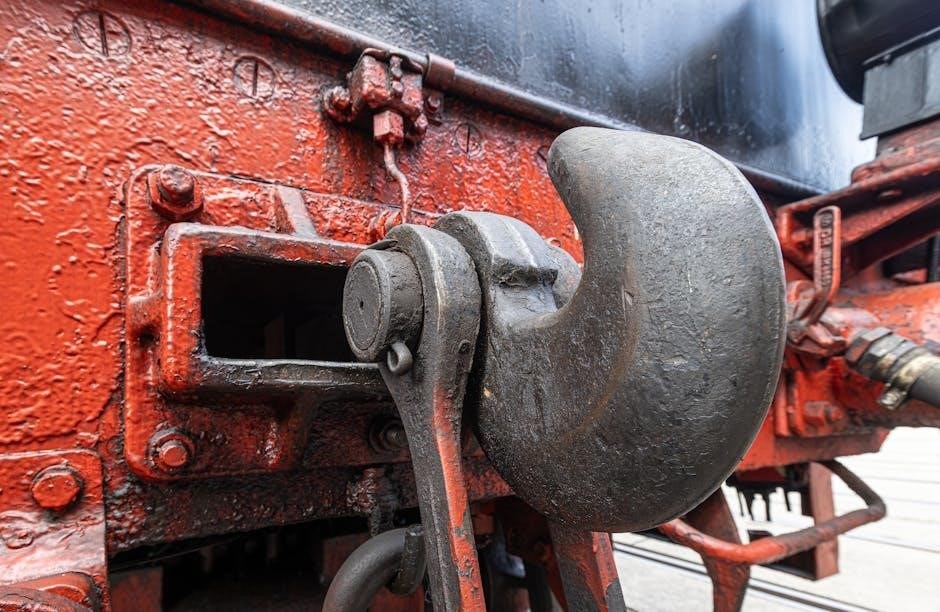
Pintle hitches represent a robust towing solution designed for demanding applications and substantial loads, often exceeding the capacity of standard receiver hitches. Unlike ball hitches, pintle hitches utilize a hook-and-loop connection – a pintle hook on the tow vehicle and a lunette ring on the trailer. This system offers exceptional strength and durability, making them ideal for industrial, agricultural, and off-road towing.
They excel in scenarios requiring frequent coupling and uncoupling, as the pintle hook design is more forgiving than a ball hitch. Welding is often required for draw bars without a back plate to ensure secure chassis attachment. Pintle hitches are commonly found on heavy-duty trailers and equipment where reliability is paramount.
Gooseneck Hitches: For Maximum Stability
Gooseneck hitches provide unparalleled stability and control when towing exceptionally heavy loads, making them a preferred choice for large trailers like those used in equestrian activities, construction, and heavy hauling. Installed within the truck bed, a gooseneck hitch features a ball protruding upwards, which connects to a corresponding coupler on the trailer.
This under-bed mounting significantly lowers the trailer’s center of gravity, dramatically reducing sway and improving overall towing safety. Draw bars require welding to the trailer chassis when lacking a back plate for optimal strength. Gooseneck hitches are capable of handling significantly higher weight capacities than other hitch types, offering a secure and reliable towing experience.
Hitch Classes Explained
Hitch classes—ranging from 1 to 5—define towing capacity, categorized by vehicle weight and trailer size, ensuring safe and appropriate trailer connections.
Class 1 Hitches: Light-Duty Towing
Class 1 hitches represent the lightest-duty towing option, typically found on smaller cars, sedans, and compact SUVs. These hitches generally have a maximum gross trailer weight (GTW) capacity of up to 2,000 pounds and a tongue weight capacity of 200 pounds. They are ideal for towing small utility trailers, bike racks, or lightweight pop-up campers.
Installation is usually straightforward, often involving bolting directly to the vehicle’s frame. However, it’s crucial to verify your vehicle’s towing capacity in the owner’s manual before exceeding these limits. Class 1 hitches often utilize a 1 ¼-inch receiver opening. While convenient for light tasks, they are not suitable for heavier loads or larger trailers, prioritizing safety and vehicle performance.
Class 2 Hitches: Small Trailers and Light Loads
Class 2 trailer hitches bridge the gap between light and moderate towing needs, commonly equipped on small SUVs, crossovers, and some pickup trucks. These hitches generally support a maximum gross trailer weight (GTW) of up to 3,500 pounds and a tongue weight capacity of 350 pounds. They are well-suited for towing small boats, jet skis, or modest camping trailers.
Typically featuring a 1 ¼-inch receiver opening, Class 2 hitches offer a balance of capability and ease of installation. Always consult your vehicle’s owner’s manual to confirm its specific towing limitations. Properly matching the hitch class to the trailer weight is vital for safe and controlled towing. These hitches provide a reliable solution for everyday towing tasks without overstressing the vehicle.
Class 3 Hitches: Versatile and Popular
Class 3 hitches represent the most popular choice for a wide range of vehicles and towing applications, offering a significant step up in capability. Commonly found on full-size sedans, SUVs, and trucks, these hitches typically boast a maximum gross trailer weight (GTW) capacity of up to 8,000 pounds and a tongue weight capacity of 800 pounds.
Featuring a 2-inch receiver opening, Class 3 hitches are incredibly versatile, capable of towing larger campers, boats, and utility trailers. They provide a robust solution for both recreational and work-related towing needs. Ensure compatibility with your vehicle and trailer, and always adhere to the manufacturer’s weight recommendations for safe operation. These hitches strike an excellent balance between strength and usability.
Class 4 & 5 Hitches: Heavy-Duty Towing Capabilities
Class 4 and 5 hitches are engineered for serious towing, designed for heavy-duty trucks and commercial applications where substantial weight is regularly moved. Class 4 hitches generally support up to 10,000 pounds GTW with a tongue weight capacity of 1,000 pounds, while Class 5 hitches exceed these figures, often reaching 17,000+ pounds GTW and 1,700+ pounds tongue weight.
These hitches utilize larger receiver openings – typically 2.5 or 3 inches – and require robust vehicle frames to handle the immense forces involved. Welding may be necessary for secure installation, particularly for draw bars without back plates. They are ideal for hauling large construction equipment, livestock trailers, or substantial recreational vehicles. Prioritize professional installation and meticulous inspection for safety.

Components of a Trailer Hitch System
A complete system includes the hitch receiver, draw bar (standard 100mm stroke), ball mount, and a correctly rated hitch ball for secure towing.
Hitch Receiver
The hitch receiver is the foundational component, bolted to your vehicle’s frame, providing the mounting point for the ball mount or other towing attachments. It’s typically a square steel tube, available in various sizes to accommodate different hitch classes and towing needs. Selecting the correct receiver is crucial, ensuring it matches your vehicle’s towing capacity and the weight of the trailer you intend to pull.
Receivers are categorized by their opening size – commonly 1 ¼ inch or 2 inch. A 2-inch receiver generally offers greater strength and versatility, supporting heavier loads and a wider range of accessories. Proper installation, often involving frame reinforcement, is vital for safety and performance. The receiver’s design must withstand significant stress during towing, making quality and secure mounting paramount.
Draw Bar (Tow Bar) ─ Standard Stroke 100mm
The draw bar, also known as a tow bar, connects the trailer to the hitch receiver, transferring towing force. Crucially, draw bars without a back plate must be professionally welded directly to the trailer chassis for structural integrity. This weld needs to be robust, comparable to those used in pressure vessels or rail construction, ensuring a secure connection.
Standard draw bars are manufactured with a 100mm stroke, defining the maximum allowable movement. Proper welding technique and material compatibility are essential for a safe and durable connection. Incorrect welding can lead to catastrophic failure. Always verify the draw bar’s rating matches or exceeds the trailer’s gross vehicle weight.
Ball Mount
The ball mount inserts directly into the hitch receiver, providing the vertical adjustment needed to ensure the trailer is level when towing. This component is critical for stable and safe towing, influencing handling and weight distribution. Ball mounts come in various drop or rise configurations, accommodating different vehicle and trailer heights.
Selecting the correct ball mount is paramount; it must be rated to handle the trailer’s gross vehicle weight. Proper adjustment ensures optimal towing performance, preventing sway and reducing stress on the hitch system. Regularly inspect the ball mount for signs of wear, bending, or damage, as these can compromise its structural integrity and safety.
Hitch Ball ‒ Sizes and Ratings
Hitch balls, which attach to the ball mount, are available in several sizes – commonly 1-7/8”, 2”, and 2-5/16”. The correct size is dictated by the trailer coupler; mismatching can prevent secure connection. Crucially, each ball size has corresponding weight ratings, clearly marked on the ball itself.
Always verify the hitch ball’s weight capacity exceeds the trailer’s gross trailer weight (GTW). Using an undersized or damaged ball is extremely dangerous. Balls are typically made of hardened steel and may have different shank diameters to fit various ball mounts. Regular inspection for wear, corrosion, or cracks is vital for safe towing operations, ensuring a secure and reliable connection.
Installation Considerations
Proper installation involves choosing between professional services or DIY, ensuring correct vehicle and trailer fit, and potentially welding draw bars securely.
Professional Installation vs. DIY
Deciding between professional installation and a do-it-yourself (DIY) approach depends on your mechanical skills and the complexity of the hitch. Professionals guarantee correct installation, adhering to safety standards and manufacturer specifications, which is crucial for towing capacity and vehicle warranty. They possess the necessary tools and expertise, especially for welding requirements associated with certain draw bars lacking back plates.
DIY installation can save money, but requires careful attention to detail, proper tools, and a thorough understanding of the instructions. Incorrect installation can lead to hitch failure, potentially causing accidents. If welding is necessary, ensure you have the appropriate skills and equipment, as welds must meet stringent standards, similar to those used in pressure vessels or rail construction. Always prioritize safety and consult a professional if unsure.
Welding Requirements for Draw Bars (Without Back Plate)
Draw bars lacking a back plate necessitate welding directly to the vehicle’s chassis, demanding a high level of welding proficiency and adherence to strict standards. This isn’t a task for novice welders; the integrity of the weld is paramount for safe towing. It’s comparable to the critical welds found in pressure vessels and rail construction, requiring robust and reliable connections.
A power source with an earthing contact and slow-blow fuse protection is essential for safe and effective welding. Proper preparation of the chassis and draw bar surfaces is crucial for weld penetration and strength. Ensure the weld fully encircles the draw bar and is free from defects. If you lack confidence in your welding abilities, professional installation is strongly recommended to avoid potential hazards.

Ensuring Proper Fit for Vehicle and Trailer
Achieving a secure connection between your tow vehicle and trailer hinges on a precise fit of all hitch components. Universal hitch kits offer versatility, but careful verification of compatibility with both vehicle and trailer is essential before purchase and installation. Mismatched components can compromise towing safety and stability.
Confirm the hitch receiver aligns correctly with the trailer’s draw bar, and the ball mount size matches the hitch ball. Consider the trailer’s tongue weight and ensure the hitch class is rated to handle it safely. Proper alignment prevents undue stress on the hitch and ensures smooth, controlled towing. A correctly fitted system unlocks the full potential of your towing setup.

Safety and Security
Protect your investment with trailer locks, secure wiring harnesses for lights and brakes, and consistently inspect your hitch for wear and damage.
Trailer Locks: Preventing Theft
Securing your trailer against theft is a crucial aspect of trailer hitch safety. The financial impact of trailer theft can be substantial, far exceeding the cost of preventative measures like a quality trailer lock. Investing in a robust locking mechanism is a wise decision, offering peace of mind and protecting your valuable property.
Various types of trailer locks are available, ranging from simple pin locks to more sophisticated coupler locks and wheel clamps. Consider the level of security needed based on your trailer’s value and the risk in your area. Remember, the money spent on a trailer lock is significantly less than the expense of replacing an entire stolen trailer and dealing with the associated hassles.
Wiring Harnesses for Lights and Brakes
Proper electrical connections are essential for safe towing. A dedicated trailer wiring harness ensures your trailer’s lights (brake lights, turn signals, running lights) and brakes function correctly with your tow vehicle. Avoid simply splicing into your vehicle’s existing wiring, as this can damage the system and void warranties.
Wiring harnesses are typically vehicle-specific, offering a plug-and-play installation. They connect to your vehicle’s electrical system and provide standardized connectors for the trailer. Ensure the harness is compatible with both your vehicle and trailer. For trailers equipped with electric brakes, a brake controller is also necessary to activate them, providing essential stopping power.
Regular Hitch Inspection and Maintenance
Consistent inspection and maintenance are crucial for hitch longevity and safety. Regularly check the hitch receiver for rust, cracks, or deformation. Examine the draw bar and hitch ball for wear, ensuring they are securely fastened. Verify all bolts are tightened to the manufacturer’s specifications – retighten as needed.
Lubricate the hitch ball and receiver tube periodically to prevent corrosion and ensure smooth operation. Inspect the wiring harness for damaged wires or connectors, repairing or replacing them promptly. Professional welding inspections are vital for draw bars welded directly to the chassis, ensuring weld integrity.

Specific Vehicle Applications
Hitches vary by vehicle; this section covers applications for buses (motor coaches) and the BMW X1, with towing capacities up to 3,700 lbs.
Trailer Hitches for Buses (Motor Buses & Motor Coaches)
Equipping motor buses and motor coaches with trailer hitches requires specialized consideration due to their size and weight. Robust hitch systems are essential for safely towing auxiliary equipment, such as cargo trailers or disabled vehicle carriers. Specific hitch models, identified by codes like 5133 and 5134, are designed for these applications, catering to both standard motor buses and long-distance motor coaches.
These hitches often necessitate professional installation and welding, particularly for draw bars lacking back plates, ensuring structural integrity. The welding must meet stringent standards, comparable to those used in pressure vessel or rail construction, guaranteeing a secure connection to the chassis. Proper selection and installation are paramount for maintaining vehicle stability and complying with safety regulations when towing with large buses.
Trailer Hitches for BMW X1 (Towing up to 3,700 lbs)
The BMW X1, a popular luxury crossover recognized with the 2022 Car and Driver Editors’ Choice award, offers impressive towing capabilities when properly equipped. Owners can utilize a trailer hitch to tow up to 3,700 pounds, expanding the vehicle’s versatility for recreational activities or light-duty hauling.
Selecting the correct hitch class and components is crucial to remain within this weight limit and ensure safe towing. Considerations include the trailer’s weight, tongue weight, and the X1’s Gross Vehicle Weight Rating (GVWR). Universal hitch kits are available, but verifying compatibility with the specific X1 model year is essential. Proper wiring harnesses for lights and brakes are also necessary for a fully functional and safe towing setup.
Universal Hitch Kits and Compatibility
Trailer hitch kits offer a convenient solution for adding towing capacity to a variety of vehicles, as more Americans are opting to tow campers and belongings. However, the term “universal” can be misleading; careful consideration of compatibility is paramount. While a kit might fit multiple vehicle types, ensuring it’s suitable for your specific make, model, and year is critical for a secure installation.
Factors like frame design, bumper configuration, and existing vehicle features can impact fitment. Always consult the kit’s compatibility chart and, if unsure, verify with the manufacturer or a professional installer. Ignoring compatibility can lead to improper fit, reduced towing capacity, and potentially dangerous situations on the road.

Advanced Hitch Features
Modern hitches include weight distribution, air hitches for smoother rides, and adjustable hitch balls to accommodate different trailer couplings effectively.
Weight Distribution Hitches
Weight distribution hitches are crucial for towing larger trailers, especially with heavier loads. They redistribute trailer weight from the rear axle to all axles of the tow vehicle and trailer. This results in improved vehicle handling, reduced sway, and a more level ride. These hitches utilize spring bars that transfer weight forward, counteracting the tongue weight.
Proper adjustment is vital for optimal performance; incorrect settings can negate the benefits or even create instability. They are particularly beneficial for SUVs and trucks towing travel trailers or fifth wheels. Investing in a quality weight distribution hitch enhances safety and comfort during long journeys, preventing excessive strain on the tow vehicle’s suspension and improving braking efficiency.
Air Hitches
Air hitches represent a sophisticated towing solution, utilizing air springs to distribute trailer weight and enhance ride quality. Unlike traditional weight distribution hitches with rigid spring bars, air hitches employ adjustable air pressure within the springs. This allows for precise weight leveling and customization based on the specific load and vehicle combination.
They offer superior articulation, adapting to uneven road surfaces and minimizing motion transfer to the tow vehicle. Air hitches are particularly well-suited for heavier trailers and provide a smoother, more controlled towing experience. Monitoring and adjusting air pressure is key to maximizing their benefits, ensuring optimal weight distribution and stability throughout the journey.
Adjustable Hitch Balls
Adjustable hitch balls offer versatility for towing trailers with varying coupler sizes, eliminating the need for multiple hitch balls. These innovative hitches feature a mechanism allowing you to quickly and easily change the ball diameter to match the trailer’s requirements. Typically, they accommodate common sizes like 1-7/8”, 2”, and 2-5/16”.
This is particularly useful for individuals who tow different trailers regularly. Adjustable hitch balls streamline the process, saving time and storage space. Ensure the locking mechanism is securely engaged after each adjustment to prevent accidental disengagement during towing. Regularly inspect the adjustment mechanism for wear and proper function, prioritizing safety and reliable performance.