Ontario Building Code 2012: A Comprehensive Overview

The 2012 Ontario Building Code, exceeding 800 pages, is available as a digital compendium mirroring the hardcopy version, ensuring budget-friendly compliance.
The 2012 Ontario Building Code (OBC) represents a significant framework governing construction standards within the province. This comprehensive document, available in both physical and digital formats – including a complete PDF compendium – establishes the minimum requirements for building design and construction, ensuring public safety, health, accessibility, and environmental sustainability.
It’s rooted in the Building Code Act, 1992, and provides objective-based regulations. The code’s structure is divided into parts addressing general regulations, building services, structural provisions, and housing/small buildings. Understanding the 2012 OBC is crucial for builders, designers, and authorities alike, as it dictates acceptable solutions for various building elements. While superseded by the 2024 code, it remained relevant during a transition period for applications submitted before March 31, 2025, provided plans were substantially completed by December 31, 2024.
Historical Context and Updates
The Ontario Building Code has undergone continuous evolution since its inception, with the 2012 edition representing a key milestone in this progression. Rooted in the Building Code Act, 1992, the code is periodically updated to reflect advancements in construction technology, materials, and safety standards. The 2012 OBC built upon previous iterations, notably the 1997 Part 9 for housing, incorporating lessons learned and addressing emerging challenges.
Subsequent updates, culminating in the 2024 Code effective January 1, 2025, demonstrate a commitment to improved energy efficiency and water management. The availability of the 2012 OBC as a digital PDF compendium facilitated wider access and streamlined compliance efforts. However, a transition period allowed continued use of the 2012 code for projects with substantially completed plans before December 31, 2024, showcasing a pragmatic approach to code implementation.
The Building Code Act, 1992
The Building Code Act, 1992, forms the foundational legal framework governing construction within Ontario. This Act empowers the development and enforcement of the Ontario Building Code, including the 2012 edition, ensuring structures meet minimum safety, health, and accessibility standards. The Act outlines responsibilities for owners, designers, builders, and code officials, establishing a clear chain of accountability.
The 2012 OBC, available as a comprehensive PDF document, operates within the parameters set by this Act. It governs both new building construction and renovations of existing structures, referencing specific requirements for various building elements. Compliance with the Act and the Code is crucial, and the digital compendium of the 2012 OBC facilitates access to the necessary information. The Act’s provisions are regularly reviewed and updated to address evolving building practices and societal needs.
Key Changes from Previous Codes
The 2012 Ontario Building Code introduced significant changes primarily focused on enhancing energy efficiency and improving water management practices. These updates represent a shift towards more sustainable building designs and operational standards; Builders were provided with ten practical compliance package options, offering flexibility in meeting the new requirements outlined in the comprehensive PDF document.
Compared to earlier codes, the 2012 OBC placed greater emphasis on objective-based regulations, allowing for innovative solutions while maintaining safety. The digital compendium of the 2012 OBC facilitated easier access to these revised standards. These changes aimed to reduce environmental impact and promote responsible resource utilization within the construction industry, impacting both residential and commercial projects.

Structure of the 2012 Ontario Building Code
The 2012 OBC is structured into three parts – General, Building Services, and Major Structural Provisions – plus Part 9 for housing and small buildings.
Part 1: General
Part 1 of the 2012 Ontario Building Code establishes fundamental provisions applicable across all construction projects, forming the bedrock of building regulation in the province. This section details administrative requirements, encompassing permit applications, inspections, and enforcement procedures, ensuring consistent oversight. It outlines definitions of key terms used throughout the Code, promoting clarity and shared understanding among stakeholders.
Furthermore, Part 1 addresses crucial aspects like health and safety during construction, fire safety planning, and accessibility standards, prioritizing the well-being of both workers and future occupants. It also covers the necessary documentation and record-keeping practices, facilitating transparency and accountability. This foundational part ensures that all subsequent regulations are applied within a standardized and legally sound framework, contributing to safe and reliable building practices throughout Ontario.
Part 2: Building Services
Part 2 of the 2012 Ontario Building Code comprehensively addresses the intricate systems that provide essential services within buildings, focusing on performance and safety. This section details requirements for plumbing systems, including water supply, drainage, and fixtures, ensuring sanitary conditions and efficient water usage. It also covers heating, ventilation, and air conditioning (HVAC) systems, emphasizing energy efficiency and indoor air quality.
Furthermore, Part 2 outlines regulations for fire protection systems, encompassing fire alarms, sprinklers, and emergency lighting, safeguarding occupants and property. Electrical systems, including wiring, lighting, and power distribution, are also meticulously addressed, prioritizing safety and compliance with industry standards. This part ensures that all building services are designed, installed, and maintained to meet rigorous performance criteria, contributing to comfortable, safe, and sustainable buildings.

Part 3: Major Structural Provisions
Part 3 of the 2012 Ontario Building Code establishes the fundamental requirements for the structural integrity of buildings, ensuring safety and stability against various loads and environmental factors. This section details provisions for foundations, framing, walls, floors, and roofs, specifying acceptable materials, design criteria, and construction methods. It addresses load combinations, including dead loads, live loads, wind loads, and seismic loads, dictating how structures must withstand these forces.
Part 3 also outlines requirements for concrete, steel, wood, and masonry construction, ensuring that materials meet specified strength and durability standards. Detailed provisions cover the design of structural elements to prevent collapse or excessive deformation, safeguarding occupants and the public. Compliance with Part 3 is crucial for creating robust and resilient buildings capable of withstanding the challenges of the Ontario climate and geological conditions.
Part 9: Housing and Small Buildings
Part 9 of the 2012 Ontario Building Code specifically governs the construction of housing, including detached houses, townhouses, and small buildings. This section provides simplified requirements compared to larger, more complex structures, recognizing the unique characteristics of residential construction. It covers aspects like foundations, framing, roofing, and building envelope performance, focusing on safety, durability, and energy efficiency.
Part 9 details requirements for fire safety, plumbing, heating, ventilation, and electrical systems in houses, ensuring a safe and comfortable living environment. It also addresses accessibility considerations for new housing, promoting inclusivity for people with disabilities. Notably, a 1997 version of Part 9 exists as a PDF document online, though builders should prioritize the 2012 code unless utilizing the transition period provisions.

Specific Requirements & Compliance
The 2012 OBC offers ten practical compliance packages, focusing on improved energy efficiency and water management, as detailed within its extensive PDF documentation.
Energy Efficiency Improvements
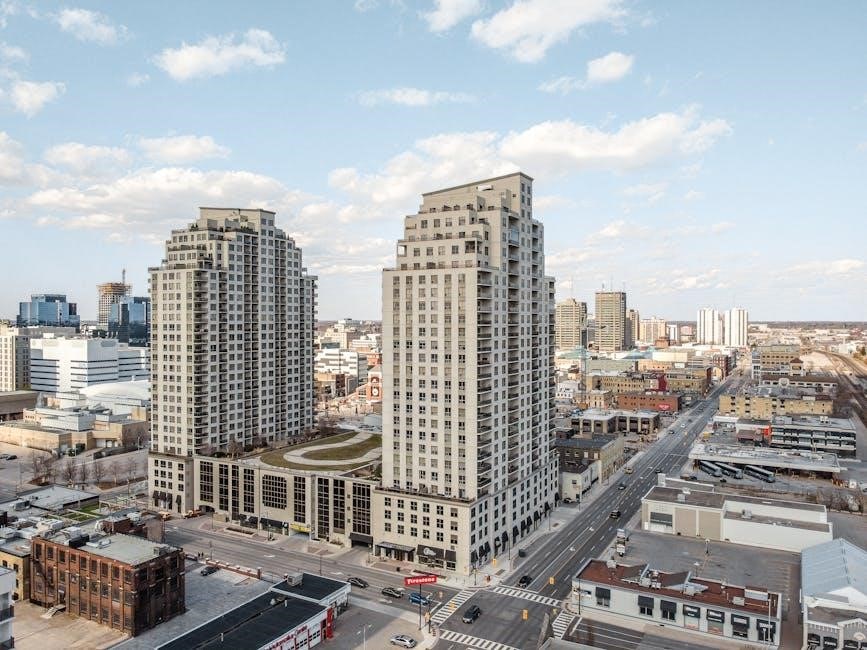
The 2012 Ontario Building Code, accessible in PDF format, significantly emphasizes energy efficiency improvements across various building types. A core objective of the code’s updates was to reduce energy consumption, leading to changes impacting insulation levels, window performance, and HVAC system requirements.

Builders were provided with ten practical compliance packages, offering flexibility in achieving these energy efficiency standards. These packages detail acceptable solutions for meeting the code’s objectives, allowing for innovation while ensuring consistent performance. The PDF document outlines specific requirements for building envelope components, including R-values for walls, roofs, and foundations.
Furthermore, the code addresses energy-efficient lighting and mechanical systems, promoting the use of high-performance technologies. Detailed tables and calculations within the PDF guide assist designers and builders in demonstrating compliance with the energy efficiency provisions of the 2012 OBC.
Water Management Regulations
The 2012 Ontario Building Code, readily available as a PDF document, introduced enhanced water management regulations to mitigate risks associated with moisture intrusion and water damage. These regulations address both exterior and interior water control, aiming to protect building structures and occupants.
The code details requirements for foundation drainage, exterior wall cladding, and roof construction, emphasizing proper detailing and material selection to prevent water penetration. The PDF provides guidance on effective flashing techniques, waterproofing membranes, and drainage planes.
Interior water management focuses on plumbing systems, drainage, and the prevention of condensation. Specific provisions address backflow prevention, fixture performance, and ventilation to control moisture levels. Compliance with these regulations, as outlined in the 2012 OBC PDF, is crucial for ensuring durable and healthy buildings.
Green Roof Design Requirements
The 2012 Ontario Building Code, accessible as a comprehensive PDF, incorporates specific requirements for green roof design, aligning with established green roof construction standards. These provisions aim to promote sustainable building practices and environmental benefits through the implementation of vegetated roof systems.
The PDF details structural load considerations, waterproofing requirements, and drainage systems necessary to support green roofs. It addresses soil depth, plant selection, and irrigation needs, ensuring the long-term performance and health of the vegetation.
Furthermore, the code outlines requirements for accessibility, maintenance, and safety related to green roofs. Compliance with these standards, as detailed within the 2012 OBC PDF, is essential for creating durable, ecologically beneficial, and code-compliant green roof installations.
Compliance Packages & Options
The 2012 Ontario Building Code, readily available as a PDF document, provides builders with ten practical compliance package choices. These packages offer flexibility in meeting the code’s objectives, particularly concerning energy efficiency and water management, as outlined within the comprehensive PDF.
The code’s objective-based structure, detailed in the PDF, allows for innovative solutions beyond prescriptive requirements. Builders can select packages that best suit their project’s specific needs and design, demonstrating compliance through performance-based pathways.
The PDF clarifies acceptable solutions for building standards, listing objectives and functional statements for various building elements. This empowers builders to navigate the code effectively and achieve compliance using the most appropriate and cost-effective methods.

Transition Periods & Current Status (as of 02/01/2026)
As of today, the 2012 OBC is permitted for applications submitted before March 31, 2025, with substantially completed plans dated before December 31, 2024.
2024 Code Implementation Date
The 2024 Ontario Building Code officially came into effect on January 1, 2025, marking a significant update to construction standards across the province. This implementation signifies a move towards enhanced energy efficiency and improved water management practices within the building sector. While the 2024 Code is now the standard, a transitional period was established to accommodate ongoing projects utilizing the previous 2012 Ontario Building Code.
This transition acknowledges the time required for builders and designers to adapt to the new regulations. The availability of the 2012 OBC in PDF format facilitated continued access to these older standards during this period. The intention was to minimize disruption and allow for a smooth shift towards the more stringent requirements of the 2024 Code, ensuring continued safety and quality in construction projects throughout Ontario.
Transition Period for 2012 Code Applications
A crucial transition period was implemented, allowing permit applicants to continue utilizing the 2012 Ontario Building Code for submissions made before March 31, 2025. However, this wasn’t a blanket allowance; applicants needed to demonstrate that their working plans were “substantially completed” under the 2012 Code prior to December 31, 2024;
This provision recognized that many projects were already underway using the 2012 OBC, and having access to the 2012 OBC PDF was vital for these ongoing applications. The “substantial completion” requirement aimed to prevent developers from deliberately delaying submissions to avoid the new, more rigorous 2024 Code. This ensured a fair and orderly transition, balancing the need for updated standards with the realities of existing construction timelines and readily available resources like the digital code compendium.
Substantial Completion of Plans Under 2012 OBC
Defining “substantial completion” was key to navigating the transition period. For applications seeking to leverage the continued use of the 2012 Ontario Building Code, demonstrating this status was paramount. It didn’t necessitate fully finalized, “shovel-ready” plans, but rather a level of detail indicating the core design and compliance strategies were established under the 2012 Code framework.
Access to the 2012 OBC PDF was crucial during this phase, allowing designers to verify compliance with the older standards. This meant that key structural, energy efficiency, and safety elements were defined according to the 2012 regulations before the December 31, 2024 deadline. Essentially, the fundamental approach to building had to be rooted in the 2012 Code, even if minor revisions occurred later.

Accessing the 2012 OBC Document
The 2012 Ontario Building Code is available as a digital compendium, a complete copy mirroring the physical version for easy access and review.
Digital Compendium Availability
The 2012 Ontario Building Code is readily accessible as a comprehensive digital compendium, offering a convenient alternative to the traditional hardcopy format. This digital version meticulously replicates all the content found within the printed Code, ensuring complete and accurate information for users.
This digital format provides numerous benefits, including ease of searching, portability, and cost-effectiveness. Users can quickly locate specific clauses and requirements, streamlining the code review process. The digital compendium is designed to ensure Code compliance remains within budgetary constraints, making it an economically priced resource for builders and professionals. It’s a valuable tool for navigating the complexities of building regulations in Ontario, offering a reliable and accessible reference point for all construction-related projects governed by the 2012 OBC.
Obtaining a Physical Copy

While the 2012 Ontario Building Code is conveniently available digitally, a physical hardcopy remains a preferred option for many professionals. This comprehensive document, exceeding 800 pages, provides a tangible reference point for on-site use and detailed review.
The physical compendium contains the complete core of the objective-based Code, including the Building Code Act, 1992. Obtaining a physical copy ensures access to all regulations, even without digital connectivity. It’s particularly useful for those who prefer a traditional approach to code interpretation and application. Though digital resources are valuable, the hardcopy offers a reliable and readily accessible resource for ensuring full compliance with Ontario’s building standards, providing a complete and authoritative guide for construction projects.
Resources for Code Interpretation
Navigating the 2012 Ontario Building Code, even with the readily available PDF version, can present interpretive challenges. Understanding the objectives and functional statements within the Code is crucial for proper application. While the document itself is comprehensive, supplementary resources can significantly aid in clarifying complex requirements.
Documents outlining acceptable solutions for building standards, dating back to 2006, offer valuable context and demonstrate how objectives translate into practical building elements. These resources, alongside the Code itself, help professionals ensure compliance. Furthermore, staying informed about updates and interpretations issued by relevant authorities is essential for maintaining accurate and up-to-date knowledge of building regulations, facilitating smooth project approvals.